Last updated 10.24.2025
What Are False Teeth?
False teeth are removable dentures that replace missing teeth. Modern materials provides natural look and confident fit.
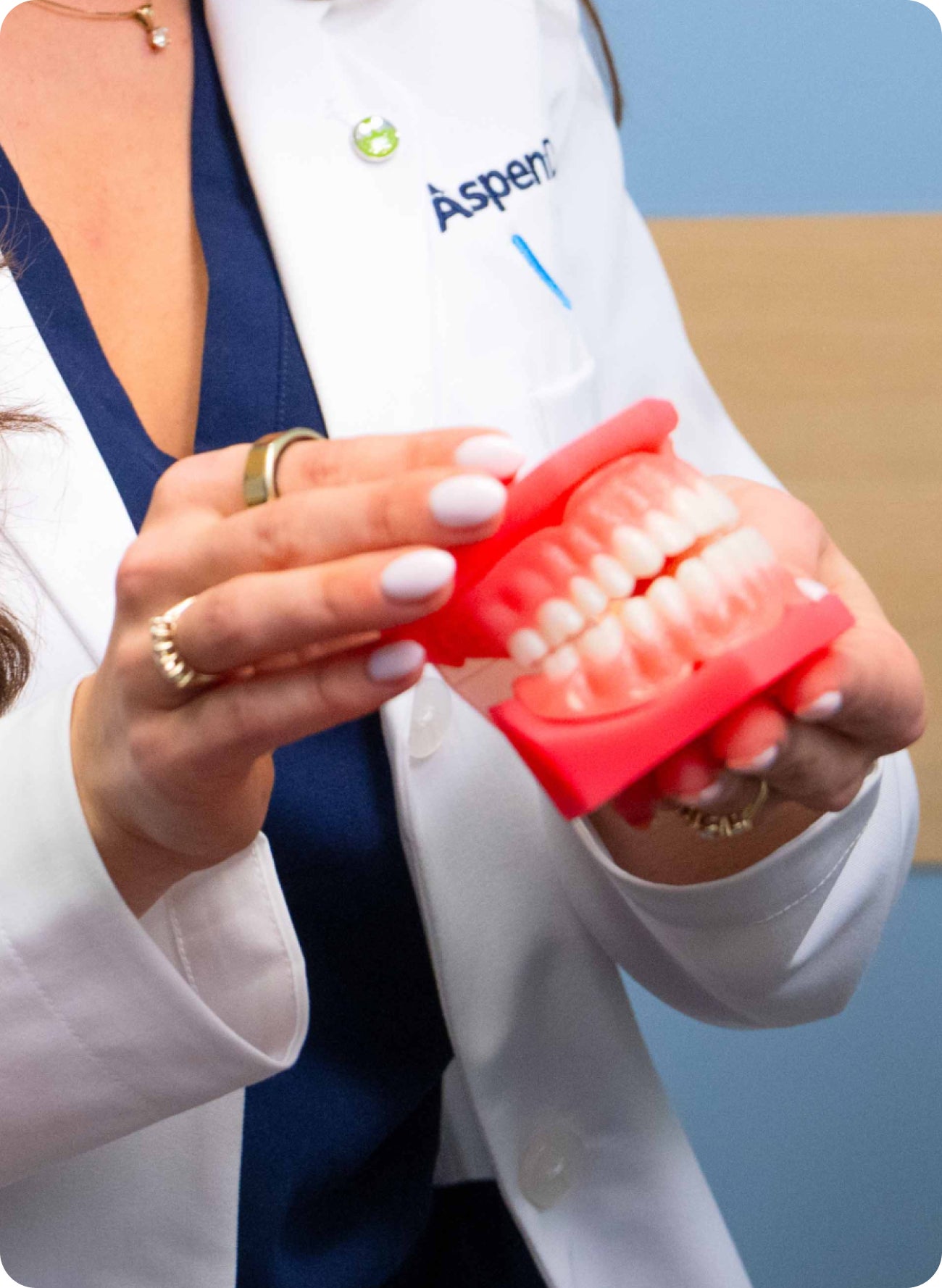
False teeth (also called dentures or dental prosthetics) are removable appliances that replace missing teeth. Each set includes lifelike teeth on a pink, gum-colored base. Full dentures replace all teeth in the upper or lower jaw, while partial dentures fill spaces when some natural teeth remain. With modern designs and materials, dentures help you eat, speak clearly and smile with confidence while also supporting your facial structure.
Understanding false teeth and dentures
False teeth give back what missing teeth take away. You can smile without covering your mouth, enjoy more foods again and speak clearly. Whether you’re missing some teeth or all of them, these removable options can help you feel like yourself again.
What artificial teeth replace
Missing teeth can make everyday life harder—chewing is tricky, speech can change and smiling may feel uncomfortable. Dentures replace teeth lost to decay, gum disease or injury. They rest on the gums and work much like natural teeth so you can chew, speak and smile with confidence. They also help prevent a sunken look by supporting your cheeks and lips, restoring a more natural appearance.
How removable teeth work
A well-made denture stays in place with a precise fit and gentle suction. Some people use a small amount of denture adhesive for added security. Partial dentures use clasps that connect to healthy teeth. Complete dentures replace all teeth on the top, bottom or both. Removable partial dentures fill gaps when you still have natural teeth. Both options restore your bite and your smile.
Modern false teeth look completely natural
Today’s dentures are designed to look like your natural teeth and gums—not bulky or “one-size-fits-all.” Materials and techniques allow a personalized shape, shade and fit. With Aspen Dental Signature and Signature Elite options, the fit, comfort and appearance are elevated—so your smile looks like you, just refreshed.
Are false teeth the same as dentures
Yes, “false teeth” and “dentures” are different names for the same removable appliances that replace missing teeth. You may also hear “dental prosthetics” or “artificial teeth.” Dental implants are another form of tooth replacement and can be combined with dentures for added stability.
Types of false teeth and dentures—choose what works for you
Different options fit different needs. The right choice depends on how many teeth you’re replacing, your goals and your budget.
type: embedded-entry-inline id: 4GxVfPkyk1FM7v0cuhmTqp
Partial dentures when you have some teeth left
If you still have healthy teeth, partial dentures fill the spaces and help keep remaining teeth from shifting. They’re removed daily for cleaning and, because they replace fewer teeth, they’re often lighter and less bulky than full dentures.
Immediate dentures vs conventional dentures
Immediate dentures are placed the same day teeth are removed, so you don’t leave without teeth. After healing, you’ll either receive your final (conventional) dentures or your immediate denture will be hard-relined for a better post-healing fit—depending on the option you choose.
Implant-supported false teeth for maximum stability
Implant-supported dentures attach to small posts in the jaw for a secure feel. They don’t slip when you eat and often feel more like natural teeth. The investment is higher, but many patients value the added stability and confidence.
What false teeth and dentures are made from
Materials influence how dentures look, feel and last. Quality materials create a more natural smile and a more comfortable fit.
Acrylic resin for denture bases
Most bases are made from acrylic—a strong, lightweight material tinted to match your gums. It’s comfortable, repairable and adjustable to help maintain a good fit.
Porcelain or acrylic for artificial teeth
Denture teeth are typically porcelain or acrylic. Porcelain resists stains and wears well; acrylic is lighter and easier to adjust. Both can look very natural. Your Aspen Dental dentist will help you choose based on your needs and budget.
Metal framework for removable partial dentures
Many partials use a thin metal framework for strength without bulk. The design distributes bite pressure evenly and supports a precise, comfortable fit.
Flexible materials for comfortable dental appliances
Some partials use flexible materials that adapt as your mouth moves. They blend with your gums and can be a comfortable, low-visibility option.
How your dental prosthetics are made
Getting dentures takes several steps to achieve a precise, comfortable fit and a natural look.
Impressions capture your unique mouth shape
We take impressions (molds) and measurements to record your bite, jaw movement and facial features—so your dentures are made just for you.
Try-in appointments let you preview your new smile
Before the final set is made, you may try in a wax model to see the look and feel. This is your chance to fine-tune fit, shape and shade.
Expert lab work creates your final dentures
Once you approve the design, trained technicians craft your final dentures with attention to detail for fit, function and appearance.
Final fitting and adjustments
At delivery, your dentist checks the fit and shows you how to insert, remove and care for your dentures. Follow-up visits are normal in the first few weeks to make small adjustments. We’re here through the entire process.
How long dentures and false teeth last
Your mouth changes over time, so dentures need periodic evaluation and maintenance.
Expect 5-7 years from most dentures
Most dentures last about 5–7 years. The ADA recommends an evaluation after 5 years to see if a replacement or reline is needed. Changes in gums, bone and daily wear can affect comfort and function. Regular checkups help catch issues early.
Know when it's time for new dentures
Talk with your dentist if dentures feel loose, you see cracks or chips, teeth look worn, chewing gets harder or your face looks different. These are signs it may be time to reline or replace.
Relines can extend denture life
A reline refreshes the surface that sits against your gums to improve the fit without making a whole new denture—helpful when the teeth are still in good shape.
Take care to make dental prosthetics last
Handle dentures carefully, avoid very hard or sticky foods and store them properly when not in use. Daily denture cleaning and regular visits help them look good and last longer. Significant weight or bone changes can affect fit, so keep your care team informed.
How false teeth change your life
Dentures do more than fill spaces—they restore comfort, confidence and everyday ease.
Eat the foods you love again
With practice, you can return to a varied diet, including fresh fruits and vegetables. Most patients progress from soft foods to a normal routine over time.
Speak clearly and confidently
Dentures support your lips and tongue so words sound clearer. Reading aloud at home can speed up the adjustment.
Look years younger with dental prosthetics
Teeth support the lower third of your face. When they’re missing, cheeks and lips can sink in. Dentures or implants restore that support to smooth lines, improve facial balance and help you look more like yourself.
Smile without hiding
A confident smile changes how you feel in photos and in person. With a secure fit and a natural look, many patients say dentures improve quality of life.
False teeth FAQs
Will anyone know I'm wearing false teeth
Today’s dentures are custom-made to match your features. Most people won’t notice unless you tell them.
Do false teeth feel like real teeth
They feel different at first, but most patients adjust within a few weeks. A precise fit helps dentures feel comfortable and secure.
What are false teeth made of
Bases are usually acrylic; teeth are acrylic or porcelain. Some partials include metal for strength. These materials are safe, durable and natural-looking.
How much do false teeth cost
Denture costs vary by type, materials and personalization. Partials generally cost less than complete dentures. Many private insurance plans help with costs. Aspen Dental also offers flexible payment options, including 3rd-party financing (with 99% of applicants approved when they apply) and the Aspen Dental Savings Plan if you don’t have insurance.
Can I eat normally with false teeth
Yes—with practice. Start with soft foods and cut items into smaller pieces. Most patients return to a regular diet over time, while avoiding very sticky or hard foods.
Can broken false teeth be fixed
Often, yes. Many cracks or chips can be repaired quickly by your dental team. Don’t use household glues—they’re unsafe and can damage the denture.
How do I clean false teeth
Rinse after meals, brush daily with a denture cleanser and soak overnight as directed. Handle them over a soft surface to avoid drops and schedule regular checkups to keep the fit on track.
Will I sound different with false teeth
Speech can change briefly while you adjust. Practice helps. Most patients return to normal speech within a few weeks.
Can I get false teeth if I have gum disease
Gum disease should be treated first for the best outcome. Your Aspen Dental dentist will outline a plan to get your gums healthy before making dentures.
How often do false teeth need replacement
Most dentures last about 5–7 years, with an evaluation recommended after 5 years. Don’t wait for a break—ask about a reline or replacement if the fit or function changes.
Does Aspen Dental accept Medicaid for false teeth
Aspen Dental does not accept Medicaid. We do offer flexible payment options, including 3rd-party financing (with 99% of applicants approved) and the Aspen Dental Savings Plan. Many private insurance plans also provide coverage. We’ll walk you through your options at your visit.
Schedule your denture appointment today
Take the first step toward a comfortable, confident smile. Schedule an appointment today. We’ll evaluate your needs, explain your options and build a plan that fits your budget and your goals.